
Big Update
The role I didn't know I was looking for & why I'm finally back in my element


I love when I’m reminded of the power of willing something into being.
Back in the fall, one of my favourite Pilates instructors shared a behind-the-scenes look at the studio she shares with her photographer husband, describing it as a “gift from God” to be able to build their businesses so close to home and prioritize family time with their young son.
I thought it was such a beautiful scenario.
Little did I know that over the Christmas holiday, I’d be radiating gratitude for my own “gift from God.”
Having become increasingly eager to move out of the city, my first thought toward the end of last year was, “I need to find a remote dream job.”
But I flopped back and forth between feeling excited and feeling flat every time I thought about my job prospects. I knew I wanted to be working at the intersection of my obsessions: writing/editing, entrepreneurship, and teaching/coaching.
But what that role looked like—let alone what it was called—was beyond me. I certainly wasn’t going to find it on a job board.
Like most roles I’ve had since I graduated in 2012 and wound up working with the Managing Director of a law firm after sending her a cold email, I knew I’d have to be proactive about creating an opportunity for myself.
I was resolved to will it into being. And that’s what I told my friends.
Then one day… a former client-turned-friend texted me a link to an informal post on LinkedIn.
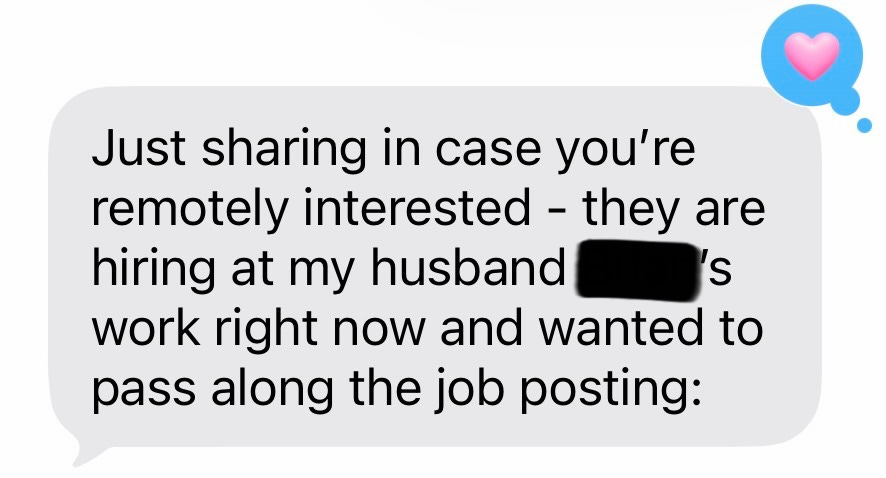
The company was looking for someone to help busy B2B CEOs create a month’s worth of LinkedIn content in just 1-2 hours per month.
They’d developed an interview model to position the CEO as an expert in their field by turning their answers into a mix of short-form content: videos, writing, graphics.
I had a coffee chat with my friend’s husband to learn more about the role and company, and quickly realized it was the exact opportunity I didn’t know I was looking for. One that would allow me to combine my obsessions with writing/editing, entrepreneurship, and teaching/coaching.
And it was 100% remote.
I couldn’t believe my luck.
Fast forward through a trial assignment and several interviews, and I wound up accepting their offer before 2025 drew its final curtain.
I started the job two weeks ago after wrapping up my latest chapter with an amazing team—and all I keep thinking, with a smile no less, is “This job is a gift from God.”
Why This Role Even Exists
Nowadays, everyone wants to know who the boss is. Not only that, but they want to be able to binge their content to understand how they think and operate. Transparency equals trust.
Most CEOs and founders get this and know they should be showing up consistently on LinkedIn. But between running a business, managing a team, and a hundred other things they’re losing sleep over, content creation gets pushed to the back burner.
When they do try to post, it’s hard. The barrier to entry isn’t just about time—it’s psychological. I saw this time and time again with the 50+ founders and creators I helped launch courses over the past few years through Maven and my small-group coaching program. Not to mention the hundreds of founders and executives I mentored through David Perell’s Write of Passage program.
Every single one of them—and every one of us who's worked hard to become a great leader—has the same fear about getting started with content creation: “I don’t want to sound dumb,” and “I don’t want to look cringey.”
When I started this newsletter four-and-a-half years ago, you would’ve thought I was sending rockets into space the way I nervously hit ‘Publish’ each week. For the first couple of months, I massively overthought everything from what I wrote to how I formatted it. Ironically, I had ten subscribers at the time, and they were fellow writer friends who were supportive as hell.
As time went by and more readers subscribed, I can’t pinpoint when I stopped feeling nervous—all I know is it took several months to gain confidence, knowing full well that my writing wasn’t good yet, but each week it was incrementally better.
My motto was “practice equals progress,” and I encourage anyone starting to create content to stick with it long enough to see the compounding effects.
The pressure to sound smart and look polished off the bat makes content creation a bigger mind game than it ought to be.
This is where the interview model changes everything.
From Long-Form Purist to Understanding the Ecosystem
When I started writing online in February 2021, I was a long-form purist. My love of writing stemmed from my love of reading, and by nature, I love to explore ideas deeply, let stories breathe, and take my time getting to the point.
But over the past few years, I’ve come to appreciate something I initially resisted: short-form content provides a stepping stone for people to discover your deeper work.
I first started writing on Medium, and I was deeply appreciative of the outpouring of encouragement from family and friends. But after the novelty of my first few posts wore off, I experienced the inevitable “dip” every content creator faces, when people who aren’t your target audience naturally lose interest, and you feel like you’re posting into the void.
That’s when it clicked for me: my writing matters to me, and I need robust guidance and feedback to improve it and reach my target audience.
So I joined Dickie Bush and Nicolas Cole’s Ship 30 for 30—a course where you write and publish a short-form post every day for 30 days alongside a cohort of peers.
The concept was simple: progress over perfection. Build the writing muscle, embrace the cringe, and most importantly, get over your fear of shipping. After 30 days, you’ll have established thought patterns, built consistency, and then you can focus on getting better.
Ship 30 led to Write of Passage—a writing program focused on long-form content, which included launching this newsletter. My first cohort as a student led to mentoring, then editing for the program.
At the same time, I developed expert skills for facilitating online workshops and courses which in turn led to my role as Head Coach for the Maven Course Accelerator. And from there, I became comfortable creating async video tutorials.
Each step built naturally on the previous one, and there was a compounding effect that improved my communication skills across the board.
But everything started with that struggle of trying to jump into long-form content without support. It was tough—and intellectually lonely. I now see huge value in getting people started on short-form and letting them build up from there.
Think about it, most people won’t give a second glance to a 2,000-word essay written by a stranger—let alone read it. But they will stop scrolling for a punchy LinkedIn post that resonates. They’ll watch a 60-second video that catches their eye and makes them think differently. They’ll save a graphic that captures an idea they’ve been struggling to articulate.
And that’s precisely how they’ll discover you. Next, they’ll find your newsletter, or your latest thoughtful essay, and eventually, your full entrepreneurial story.
Through bingeing your content, they’ll go from “casual observer” to someone who cares about what you have to say. They’ll become invested in your journey as much as your company’s.
While different platforms serve different purposes, LinkedIn is the universal starting line. It’s where everyone’s hanging out, which means it’s where you need to show up consistently.
Give them something valuable in a format they can consume quickly, and then bring them deeper into your world.
That’s exactly what I help CEOs do now.
Four Principles I Swear By
My approach to helping CEOs and founders create content is built on four principles that have fundamentally changed my life and so many around me over the past few years:
1. Write from Conversation
The best content is conversational and matches how you actually talk—not corporate jargon or AI slop. I learned this from David Perell as a mentor for Write of Passage.
“Writing from conversation is the art of using dialogue to identify your best ideas and double down on them.”
—David Perell, Creator of How I Write podcast
This is why the interview model works so well. We don’t ask CEOs to sit down and write from a blank page. We brainstorm questions their prospective clients would have, outline their responses using a simple copywriting framework, and then record them talking through their responses in a way that feels natural to them. And then we edit the videos to punch up the messaging as best as possible.
This approach lowers the barrier to entry while creating a jumping-off point for complementary copywriting and graphics.
2. Aim for ‘Eyes Light Up’ moments
The best messaging sparks an undeniable, visceral reaction from your target audience. I learned this from Wes Kao as Head Coach for the Maven Course Accelerator, and it’s become a guiding principle in everything I do.
“I call this the Eyes Light Up moment. This is the moment when your audience is viscerally, undeniably excited about what you’re talking about.
That is the reaction you’re looking for. Whenever you tell a story, share your value proposition, or test your positioning/messaging.”
—Wes Kao, Co-founder of Maven
I help founders pinpoint Eyes Light Up moments and build their content strategy around them.
3. Carve out ‘sacred hours’
Time-blocking your calendar during peak energy periods is the undisputed way to get high-value work done in the shortest amount of time—ideally through a flow state.
Ship 30 for 30 co-founder Dickie Bush calls these “sacred hours” and you must protect them at all costs.
The key to consistently creating content is to have a system and allocate the necessary time each month to brainstorm, record your videos, and approve the final content. You can do this in as little as two hours a month, but those two hours can easily bleed into much more if you don’t give them the focus they require.
4. Focus on ‘steak’ over ‘sizzle’
One of my biggest takeaways from working with startup coaches at District 3 Innovation Centre from 2020 to 2021 was:
“The difference between founders who make it and those who don’t is largely determined by their ability to focus on ‘steak over sizzle’—and it’s a lot harder than it sounds.”
If you want to go viral or chase vanity metrics, I’m not your go-to person. But if you want content that speaks to your ideal customers and drives real business results, that’s where I thrive.
Why I’m Excited
A little over two years ago, I wrote about being at a major crossroads in my solopreneur journey. I was struggling with the isolation of working alone, missing the energy of being part of a team, but also not wanting to give up on everything I’d built.
This new role supports me as an employee while empowering me to be an entrepreneur. The company’s philosophy is “you are the CEO of your career”—you’re entrepreneurial, you own your outcomes, but you’re doing it alongside a team. It’s exactly the middle ground I’ve been looking for.
And the role sits at the intersection of my obsessions.
I get to coach founders through their content journey, helping them find their voice and build confidence in showing up online. I get to support entrepreneurship—working with people building businesses they’re passionate about. And I get to do the writing and editing work I love, turning raw conversations into polished content.
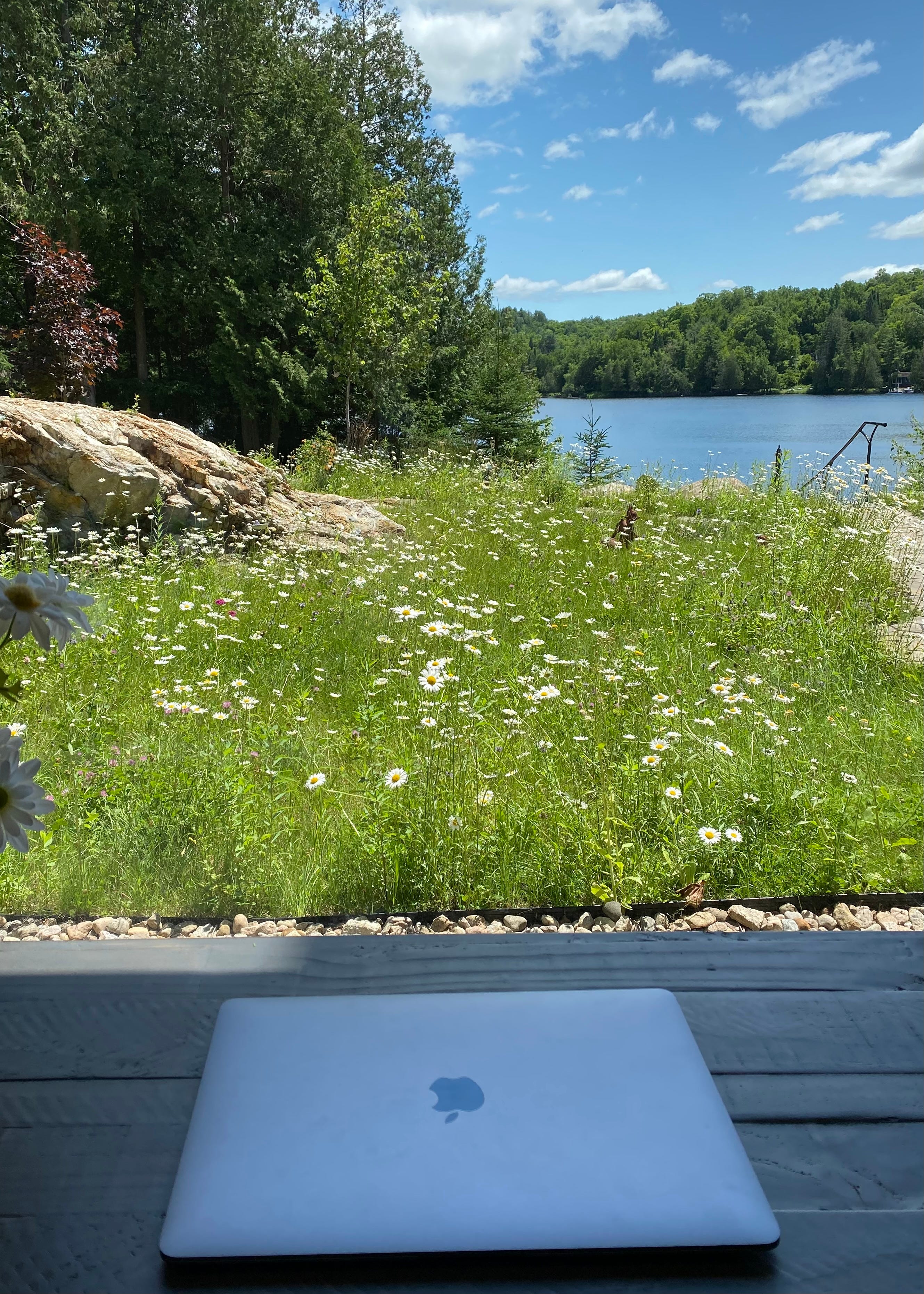
Plus, it's 100% remote, which means I'm one huge step closer to the future I'm envisioning of moving out of the city, and adopting a slower, more intentional lifestyle like the one I grew up with in the Laurentians.
The Long and Short of It
My Substack is where I share my long-form deep dives—my full story of how I got here and why this work matters to me.
Next, I’ll distill this post for LinkedIn. I’ll pull out the key insights, and might even turn them into a carousel or a short video.
This is the content ecosystem in action: short-form and long-form working together. One drives attention, while the other adds depth. One creates the entry point, while the other delivers the experience.
I’m really grateful and excited to be back doing this work.
Thanks for reading and have a wonder-full week,
You have always led by example and been completely transparent about your choices and your intentions for making them. I wish you continued discovery and joy, because I know you will continue to grow and explore in everything you do.
Alexandra, what a wonderful “Joie de vivre” post to begin my day.
Congratulations on finding this amazing new role where you will continue to grow and shine. Love your zest for life/work balance!
Wishing you continued success and many more beautiful meadows in your future.
👏👏👏👏👏👏👏